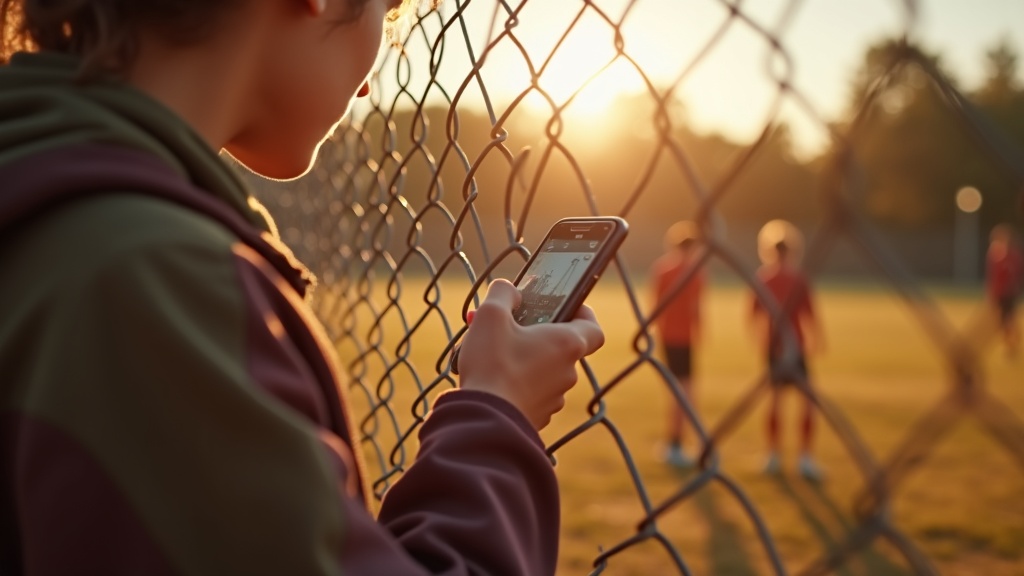
You’re at a concert, a wildlife reserve, or somewhere behind a rope barrier — and the shot you want is just out of reach. You can’t move forward. So you zoom in, hope for the best, and end up with something blurry or flat that doesn’t look anything like what you saw.
Most composition advice assumes you can walk right up to your subject, adjust your distance, and find the perfect angle. But that’s not always how it works. Sometimes the distance is fixed — by a crowd, a fence, a steep drop, or just the unspoken rules of a space.
The good news is that where you stand isn’t the only thing you can control. There are real techniques for composing a strong shot from exactly where you are — and that’s what this piece is about.
Why being closer usually helps — and why it’s not always possible
When you walk closer to something, a few things happen at once. The subject fills more of the frame. The background shrinks and blurs away. Everything that was competing for attention just… fades. The photo gets simpler, and simpler usually means stronger.
That’s why so much photography advice comes down to “get closer.” It’s not a trick. It’s just that proximity does a lot of the work for you.
But closing that gap isn’t always possible. You’re watching a heron at the edge of a lake and one more step would send it flying. Or you’re in a packed crowd at a street festival, and the person you want to photograph is behind three rows of strangers. The distance isn’t a choice you made — it’s just the situation.
This is where most composition advice quietly stops being useful. It assumes you can move. When you can’t, you need a different set of tools entirely — ways to work with the distance instead of pretending it isn’t there.
Using your phone’s telephoto lens as a composition tool
Most modern smartphones have more than one camera on the back. One of them is a telephoto lens — and when you’re stuck at a distance, it’s the first tool you should reach for. Not the pinch-to-zoom gesture. The actual telephoto camera.
Here’s the difference. When you pinch to zoom, your phone is just cropping into the existing image and stretching it bigger. The result gets soft and grainy fast. But when you tap the 2x or 3x button to switch to the telephoto camera, you’re using a completely separate lens. The image stays sharp.
What’s less obvious is what that lens does to the whole scene. A telephoto doesn’t just make your subject bigger — it pulls everything together. The background feels closer. The space between things seems to compress. Your subject looks more solid, more present in the frame.
Say you’re at a festival and there’s someone performing on a small stage. You can’t push through the crowd. You’re stuck twenty feet back. Switch to your telephoto camera and suddenly the performer fills the frame properly, but you also notice the crowd in front of them looks denser, more atmospheric. The background lights feel like they’re almost touching the subject. That’s not just magnification. That’s a genuinely different composition.
So when you can’t move closer, switching to the telephoto lens isn’t a workaround. It’s a real creative choice — one that often produces a better image than getting physically closer would have anyway.
How distance flattens a scene — and why that can work in your favour
When you’re standing far back and zoomed in, something interesting happens to your photo. Things that are actually quite far apart — your subject and whatever is behind them — start to look like they’re almost side by side. The distance between layers collapses. Everything gets pressed together into a flat, stacked image.
Most people treat this as a problem. It isn’t, once you know it’s happening.
Say you’re photographing a street musician from across a busy square. You can’t get closer — there’s a crowd in the way. But zoomed in from a distance, the ornate building behind them appears to almost touch their shoulder. The gap between person and architecture disappears. Instead of a person standing in front of a building, you get a person merged with a building. That’s a more graphic, more striking image than you’d get standing a metre away with a wide lens.
The trick is to stop thinking of the background as background. When distance compresses your scene, the background becomes part of your subject. So before you shoot, look at what’s sitting in that flattened space behind your focal point. A tiled wall, a pattern of umbrellas, a crowd of faces — all of these can become texture, colour, or context that makes the image feel deliberately composed rather than accidentally taken.
You’re not stuck at a distance. You’re choosing a look that only works from a distance.
Using foreground elements to frame your subject from a distance
When you can’t move closer, the space between you and your subject can feel like a problem. It’s just empty distance, and it shows. But there’s a shift in thinking that changes everything: instead of ignoring what’s in front of you, you use it.
Say you’re watching a street performer from behind a crowd. You can’t push through. But there’s a gap between two people’s shoulders, and if you hold your phone up and shoot through that gap, suddenly the crowd isn’t in the way — it’s a frame. The performer is distant, but the shot feels deliberate. That distance becomes part of the story.
Or you’re photographing a lighthouse from a rocky shore, too far away to fill the frame the way you’d like. A weathered post or a curve of rope sitting close to your lens gives the eye something to land on first. The lighthouse feels placed, not just spotted.
This isn’t a rule you need to apply every time. Some shots are cleaner without it. But when you’re stuck at a distance, it’s worth pausing to look at what’s actually near you. The foreground you’d normally overlook might be exactly what the shot needs.
Changing your angle when you can’t change your distance
Being stuck at a fixed distance doesn’t mean being stuck in one spot. You still have a surprising amount of movement available — sideways, up, down — and each of those shifts changes what you actually see in the frame.
Crouch down and your subject suddenly sits against the sky instead of a wall full of strangers. Raise your phone above your head and the messy foreground disappears, replaced by a cleaner view. Step two feet to the left and that bright exit sign that was sitting right behind someone’s head moves out of frame entirely.
None of these feel dramatic in the moment. You’re not repositioning yourself in any major way. But the camera sees the world differently from each of those positions, and the background shifts far more than you’d expect from such a small move.
The distance between you and your subject stays the same. What changes is everything else — what’s behind them, how much sky or ground you pick up, whether the frame feels cluttered or clean. That’s where the real composition work happens when moving closer isn’t an option.
How to keep a distant shot from feeling cluttered
The further you are from your subject, the more the world creeps into your frame. A person standing across a busy plaza doesn’t just bring themselves — they bring the lamppost behind them, the tourists cutting through the background, the signage, the noise. Up close, you’d sidestep most of that. At distance, you can’t.
The first thing to try is a small shift in your own position. Not closer — just sideways, or slightly lower or higher. Even moving a few feet can put a cleaner background behind your subject, or separate them from something that was merging into them visually. You don’t need a clear background. You just need one that doesn’t compete.
But the bigger tool at distance is timing. Crowds thin for a second. A person turns to face the light. Someone steps briefly out of your frame. These moments don’t last long, but they do the work that walking closer would normally do — they give your subject a little breathing room in the scene.
So instead of shooting the moment you raise your phone, watch for a few seconds first. Wait until your subject is doing something — laughing, gesturing, looking away — and the space around them has briefly opened up. That combination of an expressive moment and a less crowded frame is what stops a distant shot from feeling like a visual mess.
When distance is part of the story
Sometimes the distance isn’t a problem to solve. It’s the whole point.
Think about a single hiker on a wide mountain ridge. If you zoom in tight on their face, you get a portrait. But if you leave them small in the frame — surrounded by rock and sky — you get something different. You show how far from everything they are. That’s a harder feeling to fake, and a more honest one.
The same logic applies to a performer on a stage at the far end of a venue, or a deer standing at the edge of a field at dusk. Pulling in close removes the context that makes the scene interesting in the first place. The empty space around the subject is doing real work.
So before you try to compensate for the distance, ask what the distance is telling you. If the answer is scale, solitude, or environment — stop fighting it. Frame the shot to show where your subject actually is, not just that your subject exists.
This isn’t making the best of a bad situation. It’s recognizing that a small figure in a big world is its own kind of compelling image, and composing for it deliberately.